


Effective Strategies to Keep Bees Away from Hummingbird Feeders


Bees and hummingbirds both love sweet nectar, which often leads to a common problem for bird enthusiasts: bees swarming hummingbird feeders. While hummingbirds need feeders filled with sugar water to thrive, bees can quickly take over, making it difficult for the birds to feed and causing frustration for those who want to enjoy watching hummingbirds. Finding ways to keep bees away without harming them or the hummingbirds is essential for a peaceful backyard environment. Bees are important and we need to do everything we can to help them thrive.
This post explores practical, effective solutions to reduce bee visits to hummingbird feeders while keeping the feeders accessible to hummingbirds. Whether you are a seasoned bird watcher or a casual gardener, these strategies will help you maintain a bee-free hummingbird feeding station.

Why Bees Are Attracted to Hummingbird Feeders
Understanding why bees are drawn to hummingbird feeders helps in crafting solutions that work. Bees are attracted to the sweet sugar water in feeders because it mimics the nectar they collect from flowers. The bright colors of many feeders, especially red, also attract bees and other insects.
Bees can quickly overwhelm feeders, especially during hot weather or when natural nectar sources are scarce. This competition can discourage hummingbirds from feeding and may even cause damage to the feeder.
The Fat Finch has been selling hummingbird feeders for twenty years, so we have a great deal of experience with this issue. One of our pet peeves is that many hummingbird feeder manufacturers put yellow flowers on ports of hummingbird feeders. (I'm talking to you Perky Pet.) These are fine feeders, but not if you have a bee problem. Yellow attract bees, so almost every feeder we have seen with yellow on them, including those with bee guards do NOT work at deterring bees. These manufacturers could easily make these feeding port flowers red, but they don't listen to us.
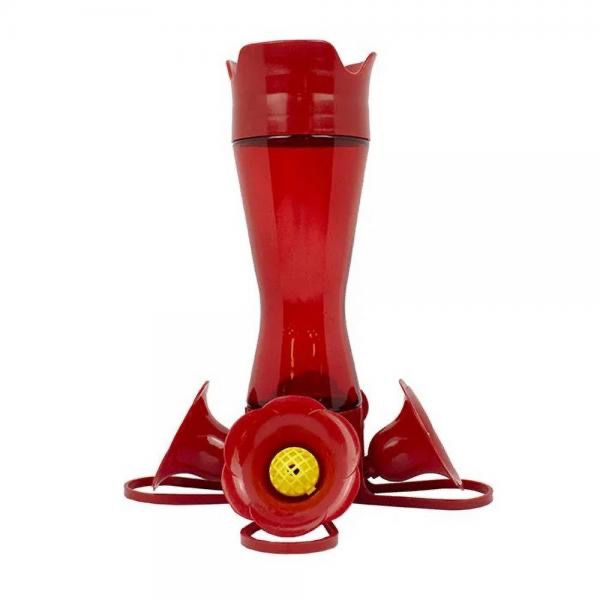
Use Bee-Resistant Feeder Designs
One of the simplest ways to keep bees away is to choose feeders designed to be bee-resistant. These feeders have features that make it difficult for bees to access the nectar while still allowing hummingbirds to feed easily.
Saucer style feeders: We have had good luck with these feeders, but it is important to fill the feeder to only half way up or less. Hummingbirds have long tongues and can reach the nectar. Bees cannot and they usually give up. Just be sure to get the ones that do not have yellow on them.
Feeder port size: Look for feeders with tiny feeding ports that fit hummingbird bills but are too small for bees. Sadly the one we used to carry is no longer available.
Switching to a bee-resistant feeder can reduce bee visits significantly without affecting hummingbird access.
Position Feeders Strategically
Where you place your hummingbird feeder can influence how many bees visit it. Bees tend to forage close to their hives and prefer sunny, sheltered spots.
Hang feeders in shaded areas: Bees prefer sunny spots, so placing feeders in partial shade may reduce bee activity.
Distance from flowers: Avoid placing feeders near flowering plants that attract bees. This reduces the overall bee traffic around your feeder.
Height and location: Hanging feeders higher or in more open areas can make it harder for bees to reach them.
Experiment with different locations to find the spot that attracts the fewest bees while still being visible and accessible to hummingbirds.
Use Bee Deterrents That Are Safe for Hummingbirds
Certain natural substances can deter bees without harming hummingbirds or other wildlife. These deterrents work by making the feeder less attractive or uncomfortable for bees.
Peppermint oil: Bees dislike the smell of peppermint. Applying a few drops of peppermint essential oil around the feeder (not in the nectar) can discourage bees from approaching. We found this method to be especially effective. Be sure to not get any oil into the nectar or very near the feeding ports.
Avoid using pesticides or harsh chemicals, as these can harm hummingbirds and other beneficial insects. Bees really do need our help.
Maintain Cleanliness and Proper Nectar Preparation
Keeping feeders clean and preparing nectar correctly can reduce bee attraction.
Clean feeders regularly: Sugar water can ferment or grow mold, which attracts more insects. Clean feeders every few days with hot water and mild soap.
Use the right nectar ratio: A mixture of 1 part white granulated sugar to 4 parts water is ideal. Avoid using honey or artificial sweeteners, as these attract more bees and can harm hummingbirds.
Avoid overfilling: Fill feeders with only enough nectar to last a few days to prevent fermentation and reduce leftover sugary residue.
Create Alternative Food Sources for Bees
Providing bees with alternative nectar sources can help divert their attention from hummingbird feeders.
Plant bee-friendly flowers: Grow native flowering plants that bloom at different times of the year to provide bees with natural nectar.
Set up a separate bee feeder: Fill a shallow dish with sugar water away from hummingbird feeders to attract bees elsewhere. Below is an example of a decoy feeder that we set up. It has nectar and plastic perky pet flowers in it to attract the bees. We set this up far away from our hummingbird feeders to draw the bees away.

By meeting the bees’ needs elsewhere, you reduce their interest in hummingbird feeders.
Monitor and Adjust Your Approach
No single solution works perfectly for every situation. Monitor your feeders regularly and adjust your strategies as needed.
Observe when bees are most active and try changing feeder locations or cleaning schedules accordingly.
Combine multiple methods for better results, such as using bee-resistant feeders with natural deterrents and alternative food sources.
Be patient. It may take time to find the right balance that keeps bees away while welcoming hummingbirds.
Finally, good luck! This is a frustrating problem, but in our experience, it is a problem that lasts for only a few weeks. However, this year the bees have swarmed earlier, likely due to climate change.
I have lived in my current home in southern Arizona for 27+ years. I started to have a problem with bees at the hummer feeders about 5 years in. I searched and found a solution: 1 part sugar to FIVE parts water. I don't remember the source, but it was a naturalist-related one. This has worked continously for me, and I have plenty of hummers, orioles, verdins, woodpeckers - even the occasional thrasher and house finch using the feeders. The slight decrease in sugar makes the nectar less detectable to bees, but still nourishing for everyone else.